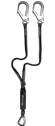
Work positioning, work restraint, and fall arrest serve different purposes and should not be selected interchangeably. Work positioning is designed to support a worker in a stable working position while allowing controlled hands-free work. Work restraint is intended to prevent the worker from reaching a location where a fall could occur. Fall arrest systems, by contrast, are designed to stop a fall after it has begun.
The right work positioning system therefore depends on the task, the worker's location, the possibility of reaching an unprotected edge, and the consequences of a potential fall. Choosing the system based only on the appearance of the equipment can create significant safety gaps.
What Is the Difference Between Work Positioning, Work Restraint, and Fall Arrest?
The main difference is what each system is designed to achieve.
A work positioning system supports the worker while performing a task, typically allowing the worker to lean or maintain a controlled position on a structure. Where a fall remains possible, work positioning should be used with an appropriate backup fall protection system in accordance with the applicable requirements and manufacturer’s instructions.
Work restraint prevents the worker from reaching a position where a fall hazard exists. The system limits the worker's travel rather than allowing the worker to approach an exposed edge.
A fall arrest system does not necessarily prevent the worker from reaching the hazard. Instead, it is designed to arrest a fall once it occurs and limit the resulting forces and fall distance within the system's specified parameters.
This distinction is fundamental when deciding which type of work positioning equipment is appropriate.
When Should You Use Work Positioning?
Work positioning is appropriate when a worker needs support to maintain a controlled position while carrying out a task, particularly where both hands may be required for the work.
Typical applications include work on poles, towers, structural or vertical surfaces where the worker needs controlled support while performing a task.
A positioning system can consist of a compatible harness attachment, positioning lanyard, and suitable anchorage or structural connection. The equipment should be arranged so that the worker can perform the task without relying on an unstable stance.
However, work positioning should not automatically be treated as fall arrest. If the worker could fall to a lower level, additional fall protection may be required depending on the specific application and applicable regulations.
What Is Work Restraint Used For?
Work restraint is used to keep a worker within a safe working area and prevent access to a fall hazard.
For example, when a worker must operate on a rooftop near an unprotected edge, a properly configured restraint system can limit the worker's travel so that the edge cannot be reached.
This makes restraint fundamentally different from positioning. Positioning helps the worker maintain a working position, while restraint controls the worker's maximum travel distance.
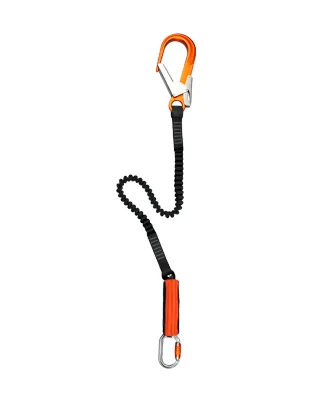
A restraint lanyard may form part of such a system, but the lanyard length must be selected according to the actual anchor location, worker movement, and distance required to prevent access to the hazard.
The key question is not simply whether the lanyard is strong enough. The complete system must prevent the worker from reaching the fall exposure under the intended working conditions.
When Is a Fall Arrest System Required?
A fall arrest system is considered when a worker may be exposed to a fall and cannot be adequately protected by eliminating the hazard or preventing access to it.
Unlike restraint, fall arrest allows the worker to enter the work area where a fall could occur. The system is then designed to arrest the fall and reduce the associated forces and consequences.
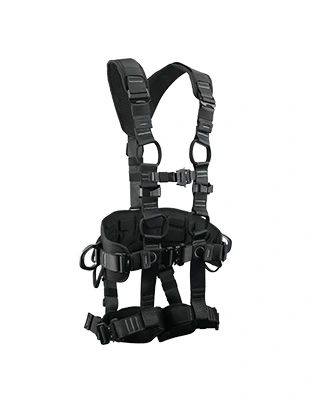
Typical fall arrest equipment may include a full-body harness, energy-absorbing lanyard or self-retracting lifeline, connectors, and an appropriate anchorage system.
Clearance is a critical consideration. The available distance below the worker must be sufficient for the fall arrest system to operate without the worker contacting a lower level or obstruction.
This means fall arrest selection requires more than choosing a rated harness or lanyard. The complete system, anchor position, fall distance, swing-fall risk, and required clearance need to be evaluated.
Is Work Positioning the Same as Fall Arrest?
No. Although the two systems may be used together, their primary functions are different.
Work positioning helps support and stabilize the worker during a task. Fall arrest is designed to stop a fall after the worker loses support or falls from the working position.
A positioning lanyard should therefore not automatically be considered a substitute for a dedicated fall arrest connection where a fall hazard exists.
In applications where both stable positioning and fall protection are necessary, workers may need equipment designed to provide positioning while maintaining a separate, compatible fall arrest connection.
Can Work Restraint Be Used Instead of Fall Arrest?
If the restraint system is correctly designed and configured to prevent access to the fall hazard, the worker should not be exposed to a fall requiring arrest.
This distinction is particularly important on roofs and elevated work platforms. If the worker can reach the edge because of excessive lanyard length, anchor location, movement around obstacles, or changes in the work area, the system may no longer function as true restraint.
Where the fall hazard cannot be reliably prevented through restraint, an appropriate fall arrest or other compliant protection method may be necessary.
How Do You Choose the Right Work Positioning Equipment?
The selection of work positioning equipment should begin with the worker's required posture and the structure on which the task will be performed.
Consider the following factors:
Where the worker needs to position their body
Whether the structure is vertical, inclined, or horizontal
The location and strength of the intended anchorage
Required working range
Whether hands-free support is necessary
Whether a separate fall arrest system is required
Compatibility between harness, lanyard, connectors, and anchor
Equipment should be selected as a complete system rather than by choosing individual components solely on rated strength.
The positioning lanyard also needs enough adjustment to maintain a stable working position without creating unnecessary slack.
How Does Lanyard Length Affect Work Restraint?
Lanyard length is particularly important in restraint applications because the system's effectiveness depends on controlling the worker's maximum travel.
The effective length should be short enough that the worker cannot reach the edge or other fall hazard. Anchor position must be considered together with the lanyard length because a change in anchor location can significantly alter the worker's available travel.
For example, moving the anchor farther from the edge may provide additional protection without requiring a shorter lanyard. Conversely, placing the anchor closer to the hazard can make an otherwise suitable restraint lanyard ineffective.
Workers should also account for movement around corners, structural obstacles, and changes in the work area rather than relying only on a straight-line measurement.
Which System Is Best for Roof Work?
The appropriate system depends on whether the worker needs to approach an edge.
If the task can be completed without reaching the fall hazard, a work restraint system may be suitable where it can be correctly configured to prevent access to the hazard.
If the worker needs to work in a supported position on a structure, work positioning may be appropriate, provided the system is configured for that task and any additional fall protection requirements are addressed.
If the worker must enter an area where a fall is possible and the hazard cannot be prevented through restraint, a suitable fall arrest system may be necessary.
The work environment should therefore determine the system—not the other way around.
Can Work Positioning and Fall Arrest Be Used Together?
Yes, in applications where the worker needs both stable positioning and protection from a potential fall.
For example, a worker may use positioning equipment to maintain a controlled position against a structure while a separate fall arrest connection provides protection if the worker falls.
The two functions should remain clearly understood, and all components must be compatible with the harness, anchorages, and intended method of use.
This combined approach can be particularly useful where positioning alone cannot eliminate the possibility of falling.
How Should a Company Select Between the Three Systems?
A practical selection process starts by asking whether the worker can reach a fall hazard.
If the worker must be prevented from reaching the hazard, consider work restraint.
If the worker needs support to maintain a stable position while working, consider work positioning.
If the worker must work where a fall could occur, evaluate an appropriate fall arrest system.
Where more than one hazard exists, the solution may combine systems rather than relying on one piece of equipment.
The employer should also consider applicable standards, workplace-specific risk assessments, equipment inspection requirements, worker training, rescue planning, and manufacturer instructions before putting the system into service.
Conclusion
Work positioning, work restraint, and fall arrest solve different fall protection problems. A work positioning system supports controlled work from a stable position, work restraint limits worker travel so a fall hazard cannot be reached, and fall arrest is designed to stop a fall that has already begun.
Selecting the correct work positioning equipment requires an assessment of the task, anchor arrangement, worker movement, and potential fall exposure. Lanyard length is equally important, particularly for restraint systems, where excessive travel can defeat the purpose of the system.
For professional safety equipment selection, the most effective approach is to match the equipment function to the actual hazard and evaluate the harness, lanyard, connectors, and anchorage as one complete protection system.
FAQs
What is work positioning used for?
It supports a worker in a stable position while performing a task, often allowing controlled hands-free work.
What is work restraint?
Work restraint limits worker movement so the worker cannot reach a location where a fall could occur.
Is a restraint lanyard the same as a positioning lanyard?
No. Their intended functions and system configurations are different.
Is work positioning a fall arrest system?
No. Positioning supports the worker during work, while fall arrest is designed to stop a fall.
Can work restraint prevent a fall?
Yes, when correctly configured, restraint prevents the worker from reaching the fall hazard in the first place.
Which system is best for roof work?
It depends on the task. Restraint is suitable when the worker can be prevented from reaching an edge; fall arrest may be needed where exposure to a fall remains.
 EN
EN
 fr
fr  de
de  es
es  it
it