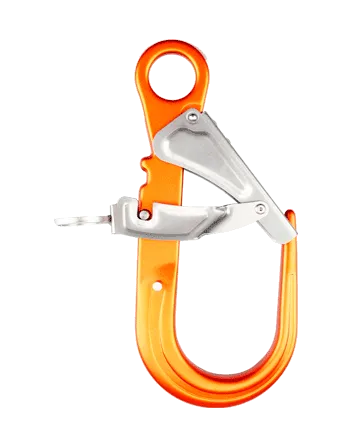
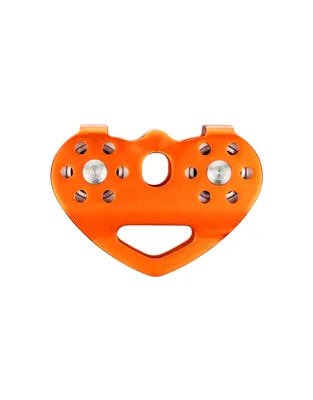
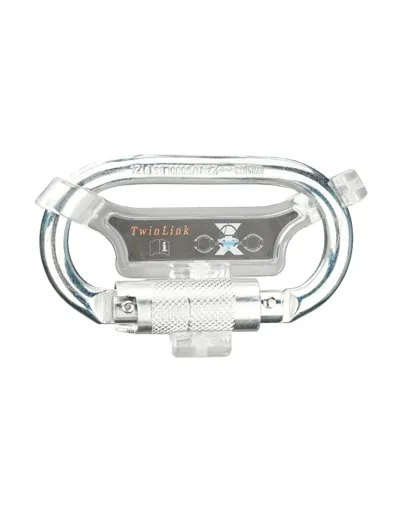
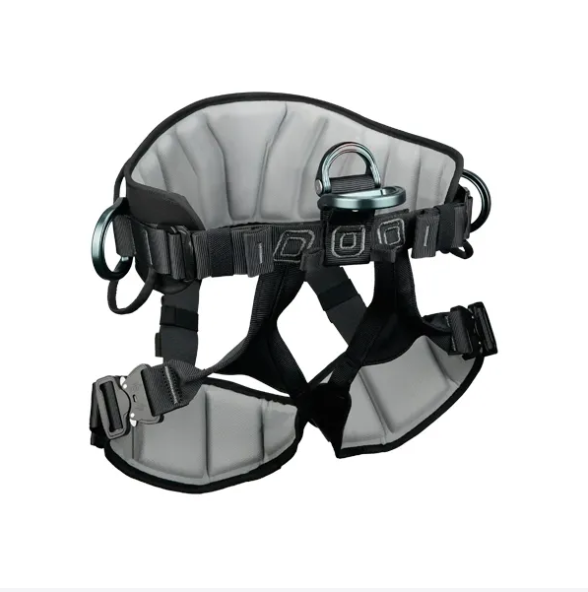
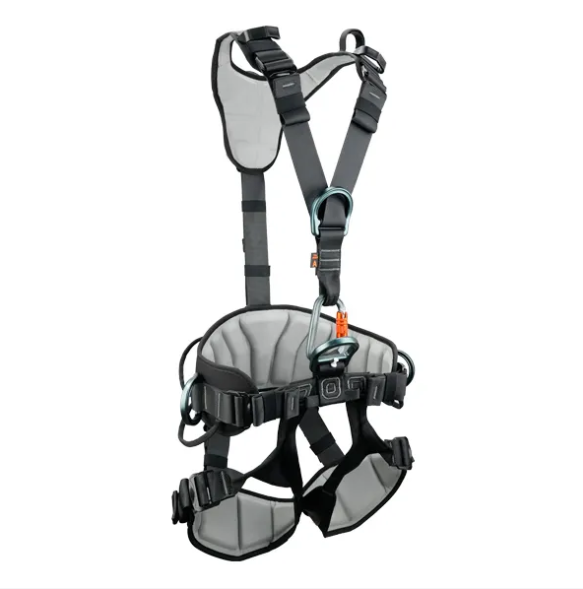
A full-body safety harness is the modern standard in fall protection, representing a major advancement over outdated body belts. It uses a network of straps and pads to securely distribute forces during a fall arrest, preventing concentrated pressure on the waist or spine that could cause severe internal injuries. Premium harnesses comply with CE marking requirements and EN 361 standards, ensuring the equipment can withstand dynamic fall forces while keeping arresting forces below harmful thresholds, typically under 1,800 lbf for most workers. The design allows the dorsal D-ring located between the shoulder blades to serve as the primary attachment point, promoting an upright posture after arrest and making rescue operations faster and safer.
What Is a Safety Lanyard?
Many buyers mistakenly use harness and lanyard interchangeably, but in reality they serve distinct but complementary roles. The harness supports the worker's body and distributes forces, while the lanyard connects the harness to a stable anchor point and absorbs the energy of a fall. Without a proper lanyard, even the best harness cannot arrest a fall. High-quality shock-absorbing lanyards deploy an internal tear-away webbing system that gradually slows the fall, protecting the worker from sudden dangerous deceleration forces. The harness supports and positions the worker's body, the lanyard connects the harness to the anchor with energy absorption, the anchor point provides secure attachment for the system, and the connector links all components safely.
How Does a Harness and Lanyard Fall Arrest System Work?
A complete fall arrest system, also known as a Personal Fall Arrest System or PFAS, operates through rapid coordinated action the moment a fall begins. When a worker slips or loses balance, the lanyard becomes taut and begins to extend, the energy absorber activates to dissipate kinetic energy, the fall is safely arrested within the designed clearance, and the worker remains suspended in a stable position until rescued. This process must occur within a very short distance while limiting forces on the body, which is why compliance with EN 355 and related European standards is critical for reliable performance in real-world conditions.
Types of Full-Body Safety Harnesses
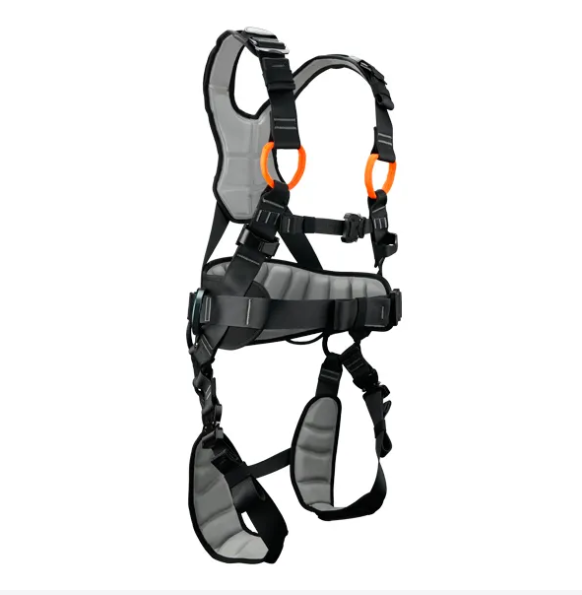
Standard fall arrest harnesses are designed for general construction and maintenance work, featuring a dorsal D-ring and providing reliable protection against falls from height. Positioning harnesses are equipped with side D-rings that allow workers to maintain hands-free stability on poles, towers, or vertical surfaces. Rope access harnesses feature front and rear attachment points and are ideal for industrial rope access and abseiling operations. Rescue harnesses have shoulder D-rings for upright extraction and are specifically engineered for confined space rescue scenarios. Tower climbing harnesses are optimized for communication towers and wind energy structures, often including comfortable seat boards for prolonged suspension. Arc flash harnesses are made with flame-resistant materials to protect against arc flash hazards in electrical utility work. Fall arrest harnesses are used for general work with back D-rings, positioning harnesses for tower and pole work with side D-rings, rope access harnesses for rope work with front and back D-rings, rescue harnesses for rescue operations with shoulder D-rings, and arc flash harnesses for utility work with back D-rings.
Types of Safety Lanyards
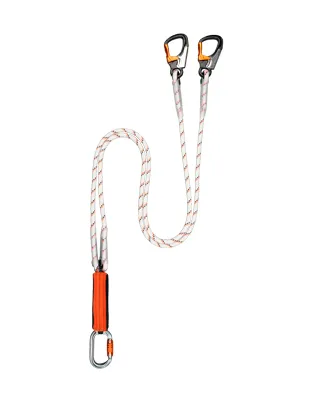
Shock-absorbing lanyards are the most widely used type for fall arrest, with built-in energy absorbers that deploy to control deceleration forces, making them ideal for most elevated work. Restraint lanyards are designed to limit a worker's range of movement and prevent them from reaching an unprotected edge. Positioning lanyards allow workers to secure themselves in a stable position while keeping both hands free for tasks. Twin-leg lanyards are popular in industrial settings where constant mobility is required, as one leg stays connected while the other is moved, ensuring 100% tie-off at all times. Adjustable lanyards offer variable length to accommodate different work heights and anchor locations. Shock-absorbing lanyards are used for fall arrest only, twin-leg lanyards for fall arrest only, positioning lanyards for positioning only, and restraint lanyards for restraint only.
Safety Harness and Lanyard Applications by Industry
Construction industry from roofing and scaffolding to steel erection remains one of the highest-risk sectors for falls, where versatile fall arrest harnesses paired with appropriate lanyards are essential. Wind energy is a key focus area for HOATER, where turbine climbs demand lightweight durable harnesses with excellent comfort for long hours at extreme heights and in variable weather.
Telecommunication towers benefit from twin-leg lanyards and positioning harnesses to maintain continuous connection during antenna maintenance. Utilities and power transmission require arc flash and dielectric-rated equipment where electrical hazards exist alongside fall risks. Oil and gas offshore platforms and refineries require corrosion-resistant heavy-duty systems built for harsh marine and industrial environments. Confined space entry uses rescue-rated harnesses with shoulder D-rings to enable safe retrieval from tanks, silos, and other tight spaces.
| Industry | Recommended Harness | Recommended Lanyard | Key Requirements |
|---|
| Construction | Fall Arrest Harness | Appropriate Lanyard | Roofing, scaffolding, steel erection; highest-risk sector for falls |
| Wind Energy | Lightweight Tower Harness | Twin-Leg Lanyard | HOATER focus area; extreme heights, variable weather, long hours |
| Telecommunication Towers | Positioning Harness | Twin-Leg Lanyard | Continuous connection during antenna maintenance |
| Utilities & Power Transmission | Arc Flash / Dielectric-Rated Harness | Positioning or Restraint Lanyard | Electrical hazards alongside fall risks |
| Oil & Gas | Corrosion-Resistant Heavy-Duty Harness | Heavy-Duty Lanyard | Offshore platforms, refineries, harsh marine and industrial environments |
| Confined Space Entry | Rescue-Rated Harness with Shoulder D-Rings | Rescue Lanyard | Safe retrieval from tanks, silos, and tight spaces |
How to Choose the Right Harness and Lanyard
Working height and clearance require calculating total fall clearance including free fall distance, lanyard elongation, harness stretch, and safety margin to avoid ground contact. Anchorage conditions require evaluating anchor strength, location, and type to select compatible lanyard length and connectors. Worker weight capacity must account for body weight plus tools and clothing, as most standard systems support up to 310–425 lbs depending on configuration. Environmental hazards require choosing flame-resistant, chemical-resistant, or dielectric models when needed. Compliance requirements require verifying certifications match your industry and regional regulations, with priority given to CE marking and relevant EN standards in European markets. Comfort and productivity benefit from well-padded adjustable harnesses that encourage consistent wear and reduce fatigue. The buyer checklist includes verifying required fall clearance calculations, confirming industry-specific compliance needs, assessing worker sizing and comfort preferences, evaluating long-term durability and replacement costs, and reviewing supplier OEM/ODM and supply chain reliability.
Common Mistakes When Using Safety Harnesses and Lanyards
Common mistakes include using a body belt instead of a full-body harness, which is outdated and dangerous as proven by multiple safety studies. Connecting to unsuitable anchor points is another error, as anchors must support at least 5,000 lbs per worker. Continuing to use damaged webbing or hardware is dangerous since even minor fraying or deformation compromises integrity. Selecting incorrect lanyard length is problematic because too long increases fall distance and risk of impact. Skipping regular inspections is a critical mistake, as daily visual checks and competent person inspections are mandatory. Webbing should be checked for fraying, cuts, burns, abrasion, or stretching. Stitching should be checked for loose, broken, or missing threads. D-rings and hardware should be checked for deformation, cracks, rust, or sharp edges. Buckles should be checked for proper function, corrosion, or damage. Labels should be checked for legibility and presence of warnings.
 EN
EN
 fr
fr  de
de  es
es  it
it