Safety harnesses and lanyards are the backbone of modern fall protection systems, designed to safeguard workers operating in elevated environments. A safety harness, or full-body harness, is a wearable device made of durable webbing straps that distributes fall forces across the body's strongest points—shoulders, thighs, and buttocks—rather than concentrating stress on the waist. A lanyard serves as the critical connection between the harness and a secure anchor point. Together, they form part of a Personal Fall Arrest System (PFAS), protecting workers from falls in construction, wind energy, telecommunications, and other high-risk industries.
What Are Safety Harnesses and Lanyards and Their Types?
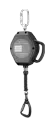
A full-body harness supports and distributes fall forces across the worker's body, while a shock-absorbing lanyard connects the worker to an anchor while reducing arrest forces. Additional components include self-retracting lifelines (SRLs) that automatically limit free fall distance, anchor points that must support 5,000 lbs minimum, and connectors like snap hooks and carabiners that link components securely.
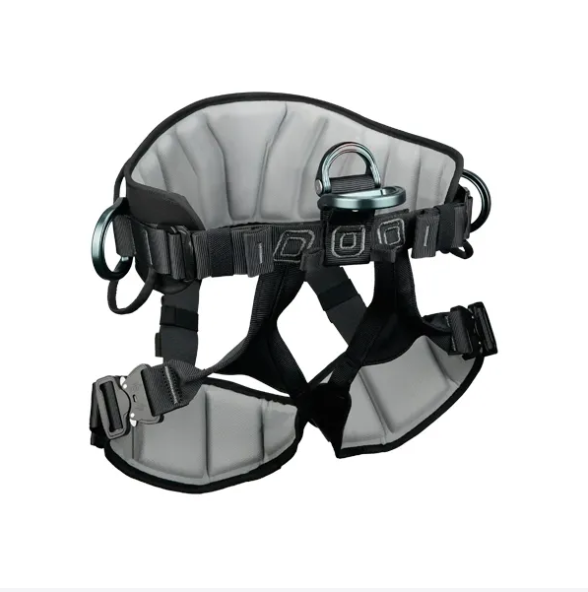
Fall protection harnesses come in different types for different applications. Fall arrest harnesses are standard for construction work. Tower harnesses are designed for wind turbine maintenance. Climbing harnesses suit telecommunication tower work. Multi-purpose harnesses work for utilities and oil & gas applications. Each type is engineered for specific movement patterns and environmental conditions.
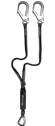
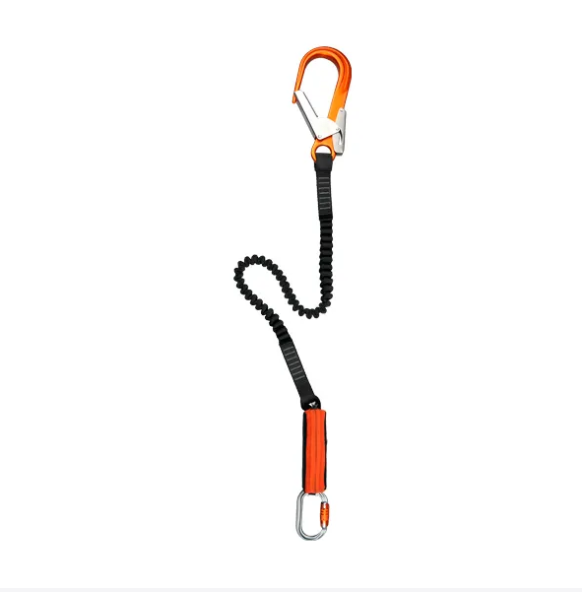
Lanyards also vary by function. Shock-absorbing lanyards are preferred for fall arrest as they limit forces to under 1,800 lbs during arrest. Twin-leg (Y-style) lanyards enable 100% tie-off by allowing one leg to remain attached while moving the other. Energy-absorbing lanyards work for general height work. Positioning lanyards support hands-free work but must be used with a separate fall arrest system since they do not arrest falls.
| Component | Function |
|---|
| Full-Body Harness | Supports and distributes fall forces across the worker's body |
| Shock-Absorbing Lanyard | Connects worker to anchor while reducing arrest forces |
| Self-Retracting Lifeline (SRL) | Automatically retracts to limit free fall distance |
| Anchor Point | Secures the entire system (must support 5,000 lbs minimum) |
| Connectors (Snap Hooks, Carabiners) | Links components securely |
How to Use Safety Harnesses and Lanyards Correctly?
Never skip pre-use inspection. Examine webbing for cuts, fraying, burns, or chemical damage. Check all stitching for broken or pulled threads. Inspect D-rings for cracks, deformation, or corrosion. Verify labels are legible and within service life dates. For lanyards, check the shock pack for deployment indicators or damage, inspect rope or webbing for abrasion or knots, and ensure hooks and connectors lock properly without wear.
To put on the safety harness correctly, hold it by the dorsal D-ring and shake it to allow straps to untangle. Slip your arms through the shoulder straps like putting on a backpack, ensuring the D-ring sits centered between your shoulder blades. Pass leg straps through your legs and buckle them securely without twisting. Buckle the chest strap across your sternum. Tighten all straps so the harness fits snugly but comfortably.
Verify proper harness fit before working. Shoulders should be snug with room for a fist underneath. The chest strap should be positioned mid-chest. Leg straps should allow a flat hand to slide underneath. The D-ring must be centered between shoulder blades. Always connect the lanyard to the dorsal (back) D-ring, not to side D-rings or tool loops which are not load-bearing.
Anchor points must support at least 5,000 pounds per worker and should be positioned overhead whenever possible to minimize free fall distance. 100% tie-off means never being unconnected from an anchor point. Use twin-leg lanyards to attach the free leg to a new anchor point, confirm secure connection, then disconnect the original leg. Never have both legs disconnected simultaneously.
| Fit Area | Correct Fit |
|---|
| Shoulders | Snug, with room for a fist underneath |
| Chest Strap | Positioned mid-chest |
| Legs | Flat hand can slide underneath |
| D-Ring | Centered between shoulder blades |
Why Proper Use Matters and What Standards Apply?
Falls remain one of the leading causes of fatal and non-fatal injuries in construction and other high-risk industries. Improper use or failure of fall protection equipment contributes significantly to these incidents. Workers who bypass protocols or use equipment incorrectly expose themselves to severe spinal injuries, internal trauma, or fatalities. Common causes include selecting the wrong anchor point, using poorly fitted harnesses, deploying damaged equipment, and incorrect lanyard connections.
Fall clearance is the most overlooked safety factor. It is the total vertical distance needed for a system to safely arrest a fall without the worker hitting the ground. A typical calculation includes lanyard length (1.8 m or 6 ft), deceleration distance (1.2 m or 3.5–4 ft), harness stretch plus D-ring shift (0.3–0.6 m), and a safety factor (0.9–1 m or 3 ft), totaling approximately 4.3+ m (14+ ft) of required clearance.
Common mistakes include improper fit leading to ineffective force distribution, wrong anchor points that are non-overhead or weak, using damaged equipment where small defects can lead to catastrophic failure, connecting to tool loops that are not load-bearing, ignoring fall clearance, and having no rescue plan since getting stuck after a fall arrest is dangerous.
| Inspection Frequency | Requirement |
|---|
| Before Each Use | Visual check by user |
| Monthly | Detailed inspection |
| Annually | Competent person inspection |
In the European market, compliance with CE marking is essential, ensuring that equipment meets EU Personal Protective Equipment (PPE) Regulation requirements. Relevant EN standards include EN 361 for full-body harnesses, EN 355 for energy absorbers, and EN 354 for lanyards, which define performance, testing, and safe usage criteria.
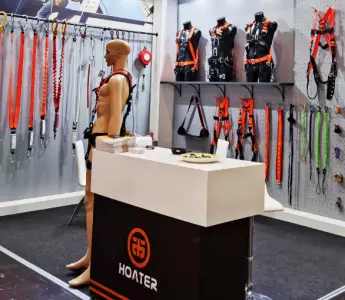
HOATER specializes in high-quality, certified fall protection equipment including full-body harnesses, shock-absorbing and twin-leg lanyards, self-retracting lifelines, and rescue systems—all CE-certified and compliant with relevant EN standards for the European market. With in-house testing laboratories, rigorous quality control, and OEM capabilities, HOATER delivers reliable solutions backed by real-world performance.
Correctly using a safety harness and lanyard is about building and maintaining a complete, reliable fall protection system. By selecting proper equipment, inspecting rigorously, fitting correctly, anchoring securely, maintaining 100% tie-off, calculating clearance accurately, and planning for rescue, you dramatically reduce risks at height.
 EN
EN
 fr
fr  de
de  es
es  it
it